Zhaoqing's Secret Heritage: Jade, Bamboo & Bagua Village
Watch master jade carvers at work and get lost in an 800-year-old Feng Shui labyrinth
Zhaoqing is an ancient cultural city with deep secrets. Witness the bustling jade trade in Sihui, raft through the endless Guangning Bamboo Sea, and get wonderfully lost in the 800-year-old circular Bagua Village. This is where Lingnan heritage meets natural wonders.
If your impression of Zhaoqing is limited to the lakes and mountains of Seven Star Crags, it's time to explore its surrounding counties. Zhaoqing is not only a cradle of Cantonese culture but also home to incredibly rich intangible cultural heritage and unique ancient villages. Today, we dive deep into Sihui, Guangning, and Gaoyao to uncover Zhaoqing's hidden faces.
The City of Jade: Sihui Jade Market
Our first stop is Sihui City, widely known as the "Hometown of Jade in China." It hosts the largest jade processing and wholesale market in the country: the Sihui Jade Market. Walking into the market, you will be overwhelmed by tens of thousands of raw jadeite stones and dazzling carvings. The most fascinating experience is wandering through the narrow alleys of the carving workshops, watching master craftsmen turn seemingly ordinary rocks into priceless art. Sihui also has a unique "Tianguang Xu" (Dawn Market) that opens in the early hours of the morning—a thrilling experience if you want to try "treasure hunting" under dim lights.
A Martial Arts Movie Scene: Guangning Bamboo Sea
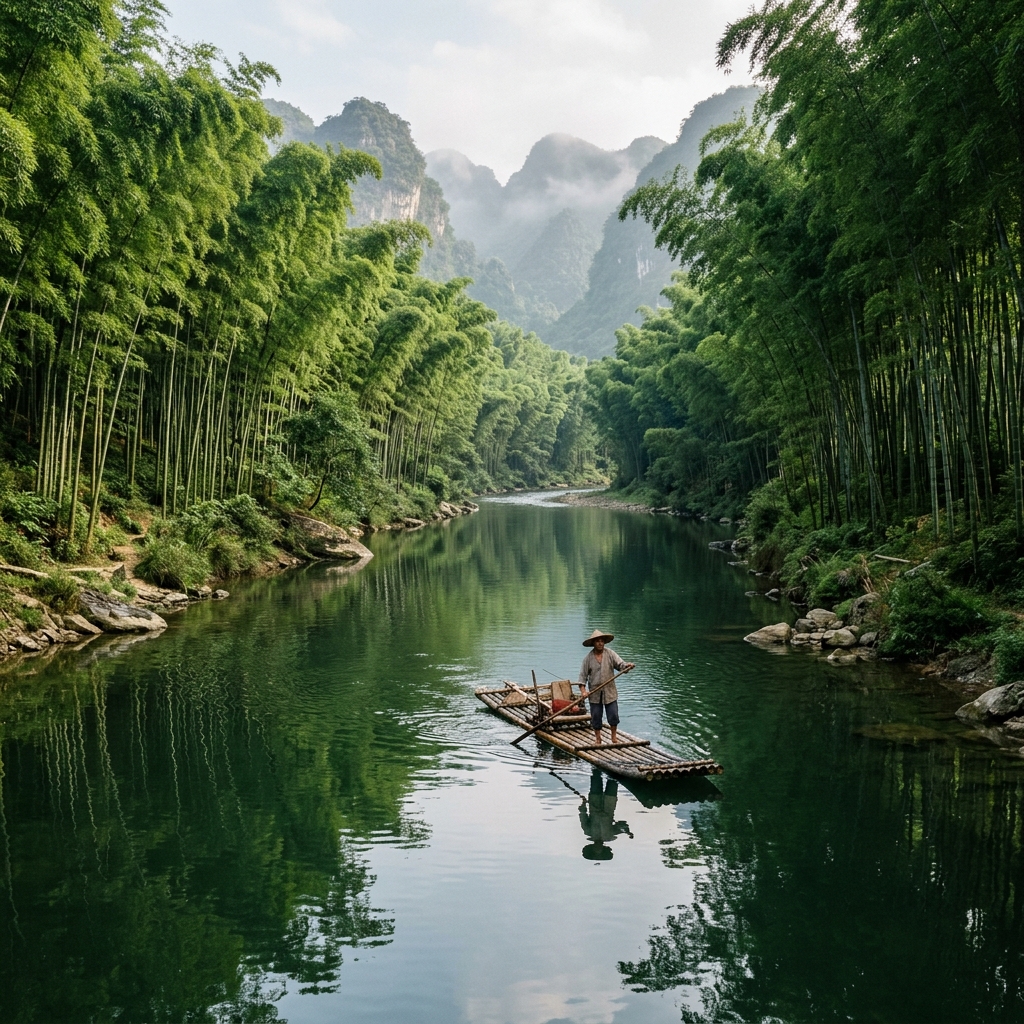
Leaving Sihui, we drive to Guangning County, famous across China as the "Hometown of Bamboo." The Guangning Bamboo Sea stretches for dozens of kilometers along the crystal-clear Suijiang River. The best way to experience it is by taking a traditional bamboo raft down the river. The water is so clear you can see the bottom, and the banks are lined with towering, lush bamboo forests. When the wind blows, the rustling bamboo leaves look exactly like a scene out of Crouching Tiger, Hidden Dragon. Don't forget to try the local bamboo feast at a nearby restaurant, featuring fresh bamboo shoots and bamboo-tube rice.
A Feng Shui Labyrinth: Gaoyao Bagua Village
On day two, we head south to Huilong Town in Gaoyao District to explore a village full of ancient wisdom: the Gaoyao Licha Bagua Village. With over 800 years of history, the houses, alleys, and waterways of this village are laid out in a perfect circle, following the Tai Chi Bagua (Eight Trigrams) pattern. Walking inside is like entering a giant maze. This peculiar layout not only satisfied the ancient pursuit of ultimate Feng Shui but also served as a brilliant defense mechanism against bandits. The village features more than ten rustic gatehouses and ancestral halls, each brick deeply etched with history.
Echoes of the Xijiang River: Lingyang Gorge Ancient Trail
For our final stop, we return to the edge of downtown Zhaoqing to hike the Lingyang Gorge Ancient Trail. This trail was carved right out of the cliffs along the Xijiang River Gorge. In ancient times, this was the path used by boat trackers hauling ships upstream against the fierce current. Today, the restored trail is a hiker's paradise. Walking along the path, looking down at the massive cargo ships navigating the river, you can truly feel the intersection of ancient history and modern commerce—a deeply awe-inspiring experience.
Sihui and Guangning are in the north of Zhaoqing, while Gaoyao is in the south. The sites are far apart, so renting a car in downtown Zhaoqing is the most convenient option. Sihui and Guangning have high-speed rail stations, but taxis are needed to reach the specific scenic spots.
The jade market in Sihui can be tricky for novices; it's best to look rather than buy, or stick to small souvenirs. Bring mosquito repellent for the Guangning Bamboo Sea in summer. The Bagua Village is a literal maze—follow the signs on the ground or ask elderly locals for directions. The Lingyang Gorge trail is about 9.5 km long; bring plenty of water and snacks as there are no supply stations along the way.