The Other Side of Dongguan: Waterfalls and Ancient Incense
Peel off the "World Factory" label to explore Dongguan's purest green lungs and historical scents
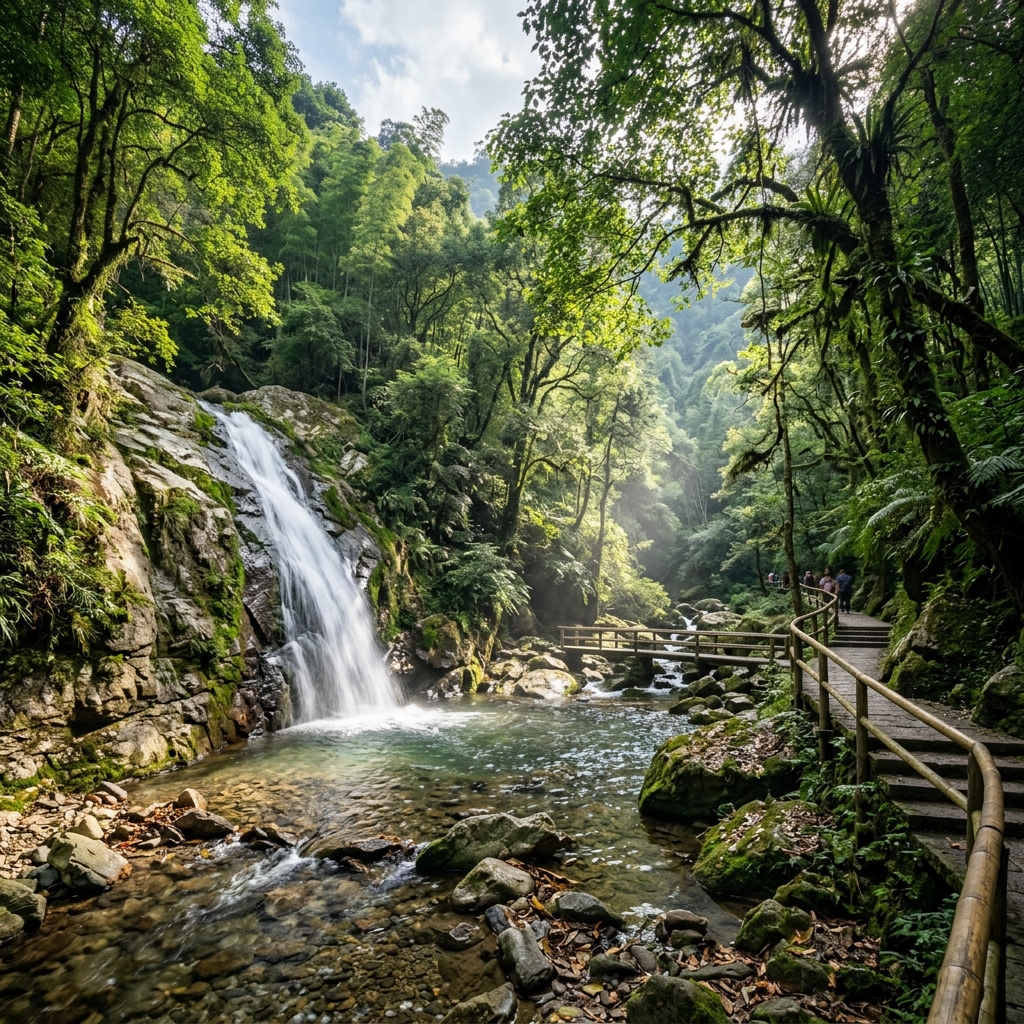
Dongguan is not just industrial zones and tech parks. Dive into the primeval greenery of Qingxi Forest Park to see waterfalls, cycle around the Tongsha Reservoir, admire the red-stone architecture of Tangwei Ancient Village, and smell the world-famous "Guanxiang" incense in Liaobu.
When people mention Dongguan, the first things that come to mind are usually its status as the "World's Factory" or Huawei's massive European-style campus. However, hidden between the dense industrial parks and modern urban centers is an incredibly rich array of natural ecosystems and cultural heritage. Today, we peel off Dongguan's industrial label to find the city's purest green spaces and oldest scents.
Finding Primeval Greenery: Qingxi Forest Park
Our first stop is Qingxi Town in southeastern Dongguan, widely praised as one of China's most beautiful towns. Its core attraction is the Qingxi Forest Park. This park retains a raw, ecological beauty, featuring dense communities of wild Machilus trees and crystal-clear streams. Exploring deep into the hiking trails, you will find the spectacular Huangmaotian Waterfall cascading down the cliffs, filling the air with mist and negative ions. If you visit in spring (March or April), you can see wild Mucuna birdwoodiana (sparrow flowers) blooming across the mountains, looking like thousands of birds resting on vines—Dongguan's most magnificent ecological wonder.
Dongguan's Little Qiandao Lake: Tongsha Ecological Park
Returning toward the city center, we visit Tongsha Ecological Park in the Dongcheng District. Centered around the Tongsha Reservoir, locals affectionately call it Dongguan's "Little Qiandao Lake." The park boasts a 15-kilometer lakeside greenway, making it a paradise for cyclists and joggers. Rent a bike and ride along the winding path with rippling blue waters on one side and lush green forests on the other, while egrets occasionally skim the surface. On weekends, the lawns are filled with colorful tents, making it a top spot for family picnics.
Years Set in Red Stone: Tangwei Ancient Village
After enjoying the natural scenery, we head to Shipai Town to explore Tangwei Ancient Village. Unlike highly commercialized ancient towns, Tangwei retains a very authentic, rustic atmosphere. Built during the Ming and Qing dynasties, the village's most striking feature is the extensive use of local red sandstone as a building material. Walking through the narrow, comb-shaped alleys flanked by old red-stone walls and grey-tiled roofs is like stepping back in time. With ancestral halls and old banyan trees complementing each other, and a few elderly residents chatting in the shade, this peaceful scene makes you completely forget you are in China's busiest manufacturing hub.
A Scent Known Worldwide: Liaobu Incense Culture Museum
For our final stop, we visit the Incense Culture Museum in Liaobu Town. During the Ming and Qing dynasties, the agarwood (incense) produced in Dongguan—known as "Guanxiang"—was world-famous and served as a tribute to the imperial court. Liaobu was the largest incense market in Guangdong at the time. The museum's exterior is designed like a giant incense box. The moment you walk into the lobby, you are greeted by an elegant, calming fragrance. The exhibits detail the entire process of growing, extracting, and processing Guanxiang. You can taste a special agarwood tea or buy some incense sticks to take home, ending your trip by discovering a deeply cultural Dongguan amid the swirling smoke.
Qingxi Forest Park and Tangwei Ancient Village are relatively remote, so driving is recommended. Tongsha Ecological Park and the Incense Museum are closer to the city center and accessible by bus or taxi. Tongsha is very large; renting a bike or taking a sightseeing cart inside is advised.
The Huangmaotian Waterfall in Qingxi is most impressive during the rainy season, but watch your step as trails can be slippery. Tangwei Village has few dining options, so bring snacks or eat outside the village. The Incense Museum is closed on Mondays. Prices for agarwood products vary wildly; shop according to your budget.